



UPS vs generator backup
UPS on Rent vs Generator Backup: Which Actually Protects Business Operations? | 9811175622
Introduction: Backup Power Is Not Just About Electricity
UPS vs generator backup
Power interruptions are a common reality for businesses across India. Offices, IT companies, hospitals, manufacturing units, and event setups all depend on uninterrupted electricity to function smoothly. When power goes off, the immediate concern is restoring electricity. However, for business operations, the real concern is continuity, stability, and system protection.
Many businesses assume that having any backup power source is enough. As a result, they often choose between a generator or a UPS without fully understanding how each option affects daily operations. While both provide backup power, they serve very different purposes.
This comparison explains how UPS on rent and generator backup differ in real operational scenarios and which option truly protects business operations during power interruptions.
Table of Contents
Understanding Business Power Needs Beyond Backup Supply
Business operations are sensitive to how power is supplied, not just whether power is available. Computers, servers, networking equipment, medical devices, and automated machinery require stable and instant electricity to function correctly.
A short delay, voltage fluctuation, or sudden shutdown can disrupt systems, corrupt data, or damage equipment. Therefore, protecting operations requires more than just restoring electricity after a power cut.
This is where the difference between UPS systems and generators becomes critical.
What Generator Backup Actually Does
Generators are designed to produce electricity during extended power outages. They start after a power cut and supply electricity to connected systems. For many businesses, generators are seen as a long-term backup solution.
However, generators do not start instantly. There is always a delay between power failure and generator activation. During this gap, systems shut down, machines stop, and operations come to a halt.
Generators also do not regulate voltage. When power is restored or switched, sensitive equipment may experience electrical stress, increasing the risk of damage.
Operational Limitations of Generator Backup
Generator backup works well for providing electricity over long durations, but it has limitations in protecting active business operations. Sudden shutdowns can cause data loss, software errors, and incomplete transactions.
In office environments, systems reboot and employees lose work progress. In IT operations, servers may shut down improperly, leading to recovery delays. In healthcare settings, even a brief interruption can pose safety risks.
These limitations make generators insufficient as a standalone solution for protecting business continuity.
What UPS on Rent Provides for Businesses
UPS on rent offers uninterrupted power supply systems on a rental basis. Instead of purchasing and maintaining equipment, businesses use professionally managed UPS solutions designed to provide instant backup.
When a power cut occurs, the UPS supplies electricity immediately without any interruption. Systems continue running, data remains protected, and operations remain stable.
Once main power is restored, the transition happens smoothly without voltage spikes or shutdowns.
Why UPS on Rent Focuses on Continuity, Not Just Backup
Unlike generators, UPS systems are designed to protect operations during power transitions. They bridge the gap between power loss and restoration, ensuring that systems do not shut down unexpectedly.
UPS on rent also provides voltage regulation, which protects equipment from fluctuations and electrical stress. This is essential for businesses using sensitive or high-value electronics.
By focusing on continuity rather than delayed recovery, UPS on rent plays a critical role in operational protection.
Online UPS vs Generator Backup in Real Business Scenarios
Online UPS systems deliver continuous power without switching delay. This means equipment does not experience even a fraction of interruption during power failure.
Generators, on the other hand, require time to start and stabilize. During this period, operations remain offline. Even after activation, power quality may fluctuate.
For businesses where uptime is critical, online UPS on rent offers a higher level of operational safety compared to generator backup alone.
Impact on Office and Corporate Operations
Office environments rely heavily on computers, internet connectivity, and communication systems. Even short power cuts disrupt workflow and reduce productivity.
UPS on rent keeps systems active during power interruptions. Employees can continue working without losing data or progress. Meetings, calls, and internal processes remain uninterrupted.
Generator backup restores electricity later, but it cannot prevent initial shutdowns or data loss. For daily office operations, UPS systems provide better protection.
Impact on IT Companies and Server Infrastructure
IT companies and server rooms require uninterrupted power to maintain uptime and data integrity. Power failure can cause server crashes, service disruption, and client dissatisfaction.
UPS on rent ensures instant backup and controlled shutdown if required. This protects servers from abrupt power loss and allows safe recovery.
Generators support long-duration outages but cannot replace the role of UPS systems in protecting IT infrastructure.
Impact on Healthcare and Critical Facilities
Healthcare facilities depend on continuous power for medical equipment and patient monitoring systems. Even a short interruption can affect patient safety.
UPS on rent provides immediate power support, ensuring critical devices remain operational during power cuts. Professional maintenance ensures reliability without placing technical burden on healthcare staff.
Generators support extended outages but are not designed to handle instant continuity requirements alone.
Impact on Industrial and Manufacturing Units
Manufacturing units rely on stable power for machinery and production lines. Sudden power loss can damage equipment, disrupt processes, and increase waste.
UPS on rent helps manage controlled transitions during power interruptions, protecting machinery and reducing stress on electrical components.
Generators provide sustained power but cannot prevent sudden shutdown damage without UPS support.
Cost Considerations: UPS on Rent vs Generator Backup
Generators require significant upfront investment, fuel costs, maintenance, and compliance management. Operational costs increase over time due to fuel consumption and servicing.
UPS on rent offers predictable costs, professional maintenance, and flexible capacity. Businesses pay only for the required backup without ownership responsibility.
From a cost-efficiency and reliability perspective, UPS rental solutions are more practical for protecting daily operations.
Why Many Businesses Use Both Solutions Together
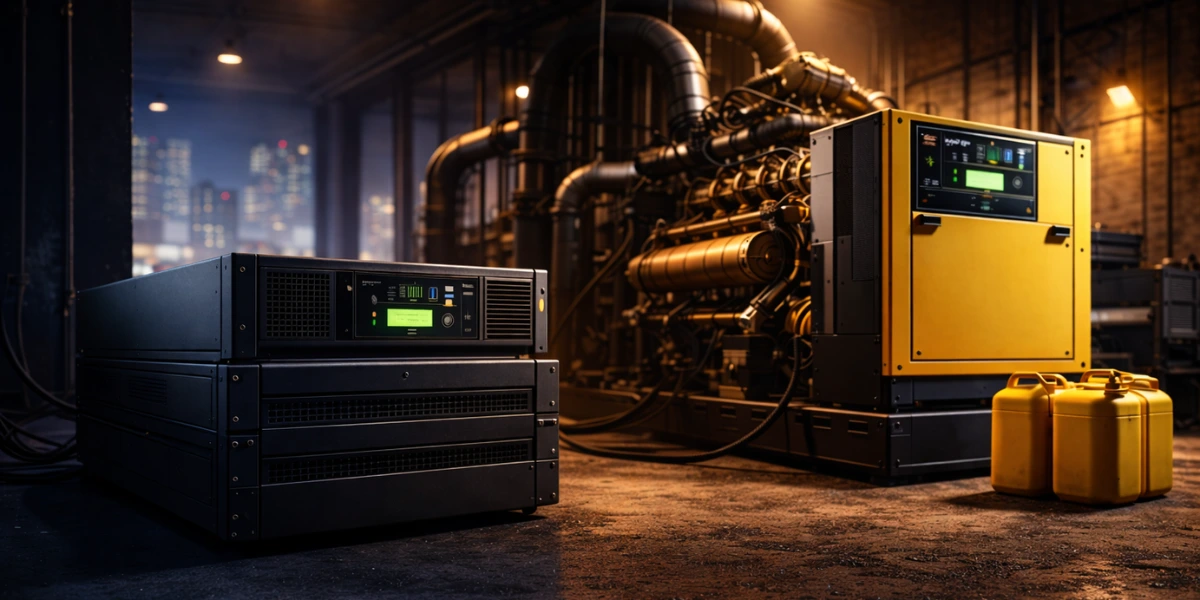
In real-world setups, UPS systems and generators are often used together. The UPS handles instant backup and system protection, while the generator provides extended power during long outages.
This combined approach ensures continuous operations without shutdowns or recovery delays. However, when choosing between the two for operational protection, UPS on rent plays the more critical role.
Generators support duration, but UPS systems protect continuity.
Why Renting a UPS Makes Operational Sense
Renting a UPS eliminates the need for large capital investment and ongoing maintenance. Businesses gain access to professionally managed systems that can be scaled as operations grow.
UPS on rent also includes technical support, regular servicing, and performance monitoring. This reduces internal workload and ensures reliability during power events.
For businesses focused on operational stability, rental solutions provide flexibility and peace of mind.
Choosing the Right Backup Based on Business Needs
The right backup solution depends on business type, equipment sensitivity, and uptime requirements. Businesses with critical operations need instant continuity, while others may prioritize extended backup duration.
Understanding these needs helps businesses choose the correct solution or combination. Professional guidance ensures optimal configuration and effective protection.
A one-size-fits-all approach often leads to operational gaps.
Long-Term Impact on Business Continuity
Consistent power stability improves workflow efficiency, equipment lifespan, and employee productivity. Businesses that invest in proper backup planning experience fewer disruptions and faster recovery.
UPS on rent supports long-term business continuity by reducing downtime, protecting systems, and maintaining operational confidence.
Over time, this stability strengthens customer trust and supports sustainable growth.
Conclusion: Which Backup Truly Protects Business Operations?
Generators and UPS systems serve different purposes. Generators provide long-duration power, while UPS systems protect instant continuity and system stability.
For daily business operations, preventing shutdowns, data loss, and workflow disruption is more important than simply restoring electricity later. In this context, UPS on rent offers stronger operational protection than generator backup alone.
Businesses seeking reliable continuity should prioritize UPS planning and use generators as a supporting solution rather than a replacement.